Hamas new charter is reflective of development
Hamas expressed its natural intellectual development over the past 30 years in the Document of Principles and Policies, former Chief of Hamas Political Bureau Khalid Meshal stated.
Sep 11, 2018 pm30 06:13 pm

Hamas expressed its natural intellectual development over the past 30 years in the Document of Principles and Policies, former Chief of Hamas Political Bureau Khalid Meshal stated.
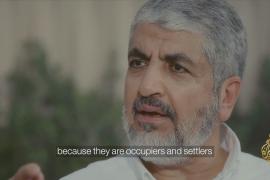
In a televised interview with Al-Jazeera TV Channel on Monday evening, Meshal confirmed that the Hamas new charter highlighted a specific era; it was composed to reflect the movement’s intellectual and political advancement.
Meshal clarified that the movement did not repudiate its original charter, but rather adhered to its principle, and furthermore, expressed its change with new principles in the new document.
Not like others, Hamas would never alter its core principles, Mesahl added.
Intellectual development
Meshal stressed that political development of Hamas came as a fruit of the movement’s reaction to the status quo ahead of Arab Spring and this was highlighted through the Document of Principles and Policies, exactly as the movement has done at different situations and periods when it had expressed its stances about them.
He emphasized that there is no contradiction in the new charter, but that the points of contentions appeared due to the diverse viewpoints and readings of others is a natural phenomenon.
The Hamas’ leader demonstrated that the new document was not a strategic or tactic change, it is ‘a natural and mature change’ based on balanced principles, rather.
Interim Palestinian state on 67-borders
Meshal confirmed that Hamas had not made any concessions regarding the interim Palestinian state on pre-1967 boundaries, but it put forward this proposal to pave the ground for national consensus, noting that the movement had adopted the option of resistance to restore the Palestinian lands and rights.
If an interim Palestinian state on 67-borders was established, he explained, Hamas would not waive the Palestinians’ claim or the rest of their occupied territories or recognize the Israeli Occupation as a state.
He added that the Israeli Occupation would not grant the Palestinians their territories or sovereignty unless it is forced to do so, as what happened when the resistence derived it out the Gaza Strip in 2005.
“The new document highlighted the cumulative development of Hamas’ political performance without waiving the national constants,” Meshal added noting that his movement had reacted positively to the status que.
He stated that Hamas would not normalize ties with any side at the expense of its national constants.
Hamas had entered into indirect negotiations with the Israeli Occupation to hammer out a ceasefire agreement and a new ‘prisoner swap deal’ through Arab and foreign mediators, he continued.
Meshal stressed that legitimacy is not granted by the international community or the Israeli Occupation, but through the polls in a clear reference to Hamas’ triumph in the 2006 parliamentary elections.
National Unity
Meshal stressed that taking the Palestinian decisions should be made jointly and this requires achieving the Palestinian unity. The movement had made everything possible to bring about reconciliation, but the PA met these concessions with sanctions on the Gaza Strip.
The PA’s leadership in Ramallah committed a grave mistake when it imposed the sanctions on the beleaguered strip, and they had paved the way for “the deal of the century” by doing so, Meshal concluded.
READ: Hamas condemns Ankara terrorist attack, voices solidarity with Türkiye
Related